 Leadership
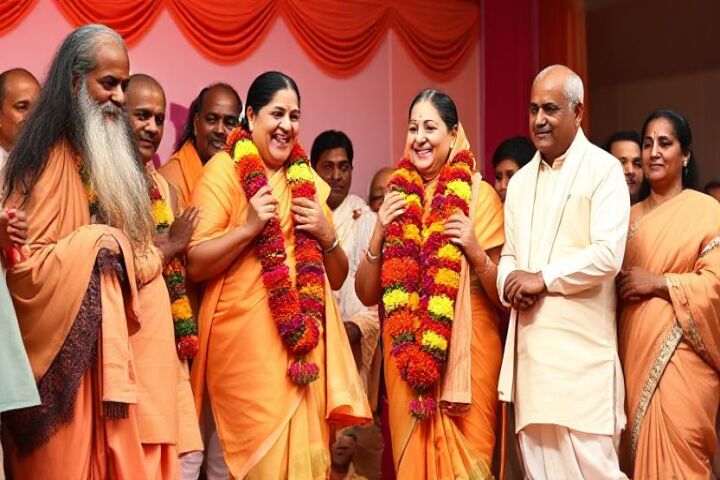
Amidst a swirl of marigold petals and the fragrance of devotion, a radiant figure stood on stage, embodying both strength and serenity. Draped in saffron robes—the color of courage, sacrifice, and spiritual fire—she did not merely command attention, she invited reverence. Around her, elders and spiritual leaders offered garlands woven with tradition and respect, draping her in the collective gratitude of a people who saw in her something far greater than power. She was not just a leader; she was a symbol of what leadership can be when rooted in humility and heritage. The setting buzzed not with fanfare but with a quiet reverence, where every smile, every bowed head, every blooming flower garland carried the weight of centuries-old customs meeting a future shaped by feminine resolve. There was no arrogance in her posture, no pretense in her smile—only the grace of someone who led by being among, not above. In that sacred gathering, surrounded by those who saw leadership as a form of service, her presence echoed a quiet revolution: that devotion and direction are not separate paths, and that a woman cloaked in wisdom can walk both with ease, reshaping history not with noise, but with nuance